Heavy Duty Dog Waste Bags: The Responsible Disposal Guide for 2026
Picking up after your dog is only half the job. What you do next decides whether that waste becomes a harmless, well-managed byproduct or a source of water pollution and neighborhood complaints. Choosing heavy duty dog waste bags and pairing them with correct disposal habits is the single easiest way to protect your local waterways and stay on the right side of municipal rules.
This guide skips the marketing hype and focuses on the civic side of pet waste: proper disposal, the persistent “flushable” myth, composting limits, and why a bag that does not tear matters more than most owners realize.
Why Dog Waste Is an Environmental Problem, Not Just a Mess
A single gram of dog feces can carry millions of fecal coliform bacteria, along with pathogens like Giardia, roundworm, and E. coli. When rain washes uncollected waste into storm drains, it flows untreated into rivers, lakes, and bays.
The U.S. Environmental Protection Agency has long identified pet waste as a measurable contributor to nutrient loading and bacterial contamination in urban watersheds. You can read their stormwater guidance directly on the EPA pet waste page, which classifies it as a nonpoint source pollutant.
Left on the ground, waste also releases excess nitrogen and phosphorus into soil and groundwater. That is not “natural fertilizer” the way many owners assume. Dog diets are too rich for lawns, and the pathogen load makes it unsafe near vegetable gardens or play areas.
The Litter Angle No One Talks About
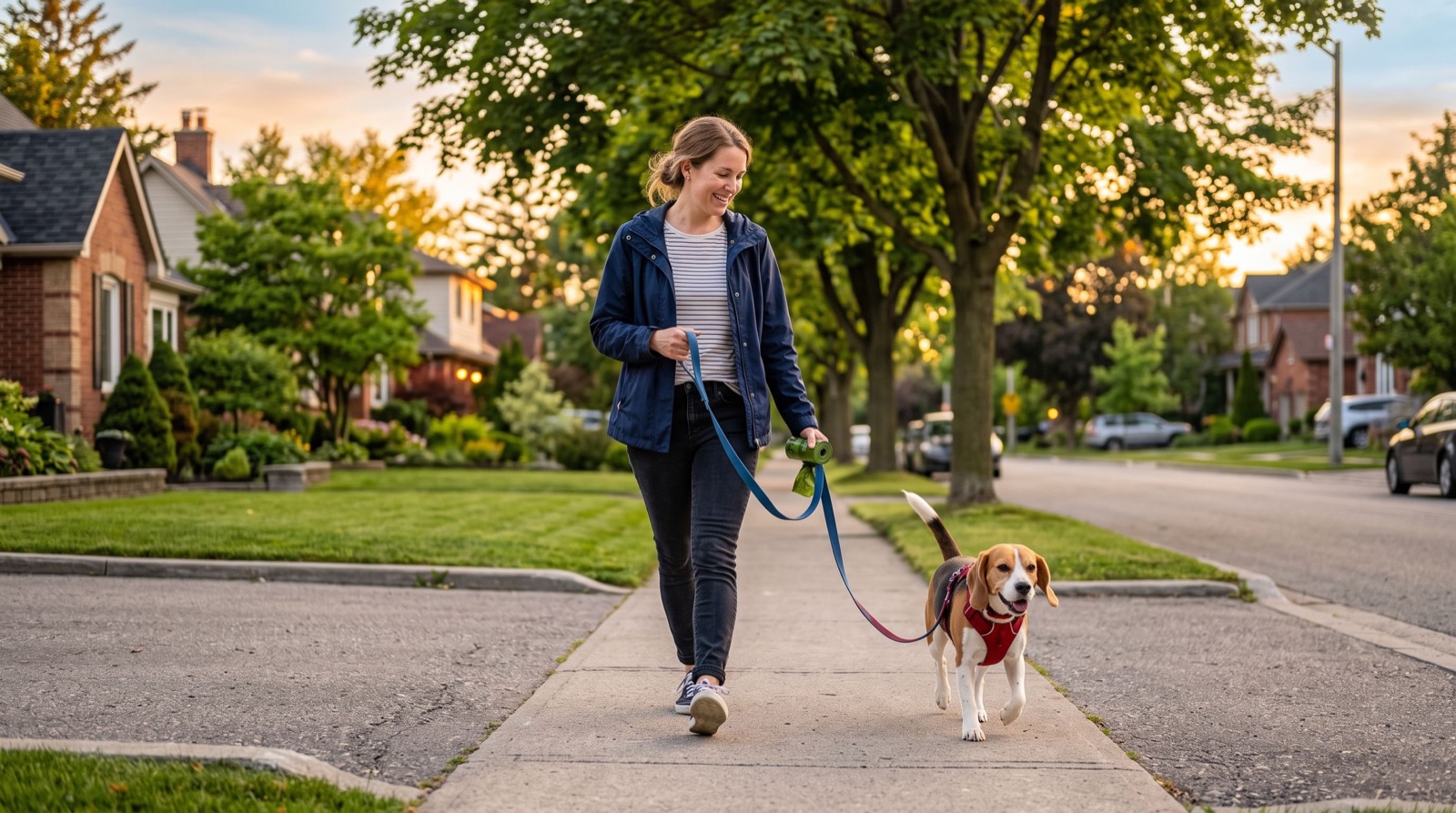
Thin, cheap bags fail. They split at the seam, leak through pinholes, or tear on a rough sidewalk. When that happens, owners give up mid-walk, and the waste stays put. A sturdier bag is not a luxury; it is what makes consistent pickup realistic.
How Should You Actually Dispose of Dog Waste?
Correct disposal is boring, and that is the point. The reliable method is simple: scoop it, seal it in a durable bag, and place it in your regular household trash unless your municipality directs otherwise.
Follow these steps every single time:
- Bag the waste immediately, turning the bag inside out over your hand first.
- Tie the top with a tight knot to trap odor and bacteria.
- Drop it in a lidded trash bin, never a recycling or yard-waste container.
- Wash or sanitize your hands, even though the bag protected you.
For yards, a weekly sweep beats a monthly marathon. Sturdy tools help here — a good grabber saves your back and keeps you consistent. If you clean a larger yard, a proper scooper like a long-handled Pooper Scooper nearby lets you collect and bag in one motion without bending over repeatedly.
Curbside Programs and Local Rules
Rules vary by city, and in 2026 more municipalities are publishing explicit pet-waste ordinances tied to fines. Some allow bagged waste in the trash; a few pilot programs accept it in green-waste digesters. Always check your city’s sanitation page before assuming.
The “Flushable” and “Compostable” Myths, Explained
Two claims cause the most confusion. Let’s take them apart honestly.
Is Flushing Dog Waste Safe?
For most homes, no. Municipal wastewater plants are built to handle human waste, but many older sewer systems and nearly all septic systems struggle with dog waste and the bags that carry it. Even “flushable” bags can clog pipes and jam pumps.
If you have a modern municipal connection and remove the waste from the bag first, some utilities permit flushing. Septic owners should never flush it — the extra solids and pathogens can overwhelm the tank’s balance.
Can You Compost It?
Only with strict conditions. Standard backyard compost piles rarely reach the sustained 145°F (63°C) needed to kill dog-waste pathogens. That means home compost from dog waste should never touch edible crops.
Dedicated pet-waste digesters exist, and some universities run guidance on them. The composting fundamentals from Cornell University’s Waste Management Institute explain the temperature and separation requirements in detail.
Here is a quick, honest comparison of the disposal routes owners actually consider:
| Disposal method | Safe for most homes? | Pathogen risk if done wrong | Best for |
|---|---|---|---|
| Bag + household trash | Yes | Low | Almost everyone |
| Flushing (no bag) | Only some municipal systems | Medium | Modern city sewer, no septic |
| Home compost | Rarely | High | Ornamental soil only, experts |
| Pet-waste digester | With effort | Low-medium | Yards, committed owners |
Why Heavy Duty Dog Waste Bags Reduce Contamination
A bag’s job is containment. If it fails, everything downstream fails with it. Thicker, leak-resistant material keeps bacteria sealed away from your hands, your trash bin, and the ground.
When you shop, look for a few real specifications rather than clever branding. Quality heavy duty bags tend to share the same measurable traits, and those traits are what actually prevent leaks and litter.
- Thickness: A minimum gauge that resists pinholes on rough pavement.
- Seam strength: Fully sealed bottoms, not folded-and-hoped edges.
- Opacity: Blocks odor perception and hides contents for hygiene.
- Grip: Easy-open lips so you never fumble in the cold.
- Size: Room to tie a real knot without stretching the seams.
The environmental payoff is direct: fewer failed pickups means less waste washing into storm drains. Reliability is an ecological feature, not just a convenience. Owners who trust their bags simply pick up more often, and that consistency is what protects a watershed over a full year.
Material Trade-offs to Understand
Certified compostable films break down under industrial conditions but need those conditions to matter. Recycled-content plastics reduce virgin material use. Whatever you choose, the non-negotiable is that it holds together from scoop to bin.
Being a Good Neighbor: The Civic Layer
Responsible disposal is partly about ecology and partly about community trust. Uncollected waste drives complaints, HOA disputes, and, increasingly, ticketed fines. A little discipline keeps shared spaces usable for everyone.
Carry more bags than you think you need, keep a spare in the car and by the door, and never rely on someone else’s roadside dispenser being stocked. If you hire out yard cleanup, vet the crew the same way you would any other home service — reliability and hygiene practices matter, and comparing quality service providers is a habit worth applying to every vendor you use.
Frequently Asked Questions
Are heavy duty dog waste bags better for the environment than thin ones?
Yes, in practice. Thin bags fail and cause skipped pickups, which is the real pollution driver. A durable bag guarantees the waste actually reaches a bin, and many are available in recycled or certified-compostable material to reduce plastic impact further.
Can I put dog waste in my curbside recycling or green bin?
No. Recycling streams reject contaminated organics, and most green-waste programs specifically exclude pet feces because home and municipal composting rarely reaches pathogen-killing temperatures. Use household trash unless your city explicitly allows otherwise.
Does dog waste really pollute water?
Yes. The EPA lists pet waste as a nonpoint source pollutant. Rainwater carries uncollected waste into storm drains that flow untreated to rivers and lakes, raising bacterial and nutrient levels that harm aquatic life and swimmers.
Is it safe to flush dog poop down the toilet?
Only for some modern municipal sewer systems, and only after removing it from any bag. Septic-system homes should never flush it. When unsure, bagging and trashing is always the safe default.
Conclusion: Disposal Discipline Starts With the Bag
Environmental responsibility does not require a composting degree — it requires consistency. Reliable heavy duty dog waste bags, a firm knot, and the right bin protect your watershed far more than any single “eco” gadget. Skip the flushable myth, respect your local 2026 ordinances, and treat every walk as a small civic act.
Stock up on durable bags, keep a scooper handy for yard days, and make responsible disposal the effortless default. Your neighbors, your local waterway, and your dog will all benefit.